Unit Introduction:
The professional practice unit, includes modes of practices such as industry based experiences, internships, industry led projects, social enterprise activities, speculative or self initiated projects, practice in community, entrepreneurship’s and freelance working.
During the Professional Practice Unit, I will develop and test my knowledge of the creative, cultural and design industries. I will critically reflect on my status as practitioner around identity building. This unit will help me to explore and critique diverse models of practice, and provide opportunities for my own design practice.
The six important aspects about this unit are proactivity, enterprise, communication, connectivity, curiosity and self-efficacy. The unit aims to develop my creative attributes such as ‘making things happen’ and showcasing my talent to other peers.
The learning outcomes, for this unit will focus on subject knowledge, communication and presentation, personal and professional development, independent professional working and lastly collaborative working.
The unit will be delivered and assessed through the collaboration with students in groups from different coursers from year 2. It will also contribute to series of seminars, lectures, debates, and presentations, inspired by the creatives, cultural and design industries.
Week 1: Values and Motivation 24/09/19
In the first session we were able to pick our groups from different coursers where we have to work on a project brief. My group consists of two people from BA Design for Branded Spaces; Kat and Sophie. As well as two people from BA Illustration and Visual Media; this is myself and Caterina. Lastly, we have one person from BA Graphic Design; Marina. I am excited and happy to work in my group in order to create something creative and be able to learn from each other. This is my first project of working in a collaborative project, and showcasing it to other people.
The brief we have been set is about us; the future creative leaders, who’s decision making will help our future. Our interests, concerns and motivations have the potential to drive our creative approach and capability to make things happen. In our teams, we have to develop a project concept this can be a product, service or campaign, that identifies a problem with a Gen Z or Millenials are currently face, and we have to design a possible solution to solve the problem.
There are no limitations to out final concept. Our idea may be big or small. The idea has to identify what you perceive as a real need, for our audience and demonstrate the need with research evidence.
The final outcome for this project is the final outcome with my group, as well as visual portfolio documentation which can be created as anything with 500 words of explanation, as well as 1000 words describing the development process.
Week 1: 24.09.19 Values and Motivation
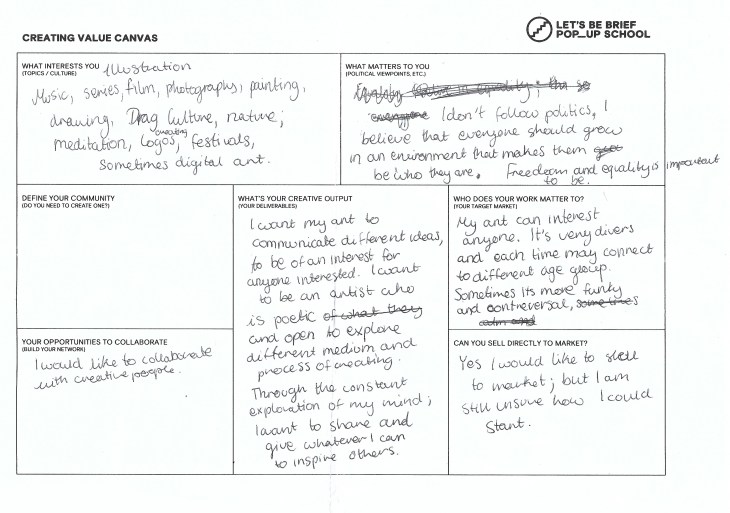
To open our minds, we have been given a sheets called ”Creating Value Canvas” with seven important questions that will help us understand our minds as creatives.
- What interests you? (Topics and Culture)
Music, series and films (different genres), analogue and digital photography, the creation of film production, painting and drawing, creating illustrations, Drag Culture, Punk Culture, nature, meditation, creating logos, typography, festivals and freedom, digital art. - What matters to you? (Political viewpoints, etc)
I don’t really follow politics, however I do believe that everyone should be equally treated with fairness and grow in an environment that allows them to grow into who they are. The things that matters to be me is kindness, helping other people, allowing others to grow in healthy environment where they are heard and treated with respect. I think everyone should be free to explore themselves in any possible way without the judgment of other people. - Who does your work matter to? (target market)
My art can interest anyone. It is very divers and each time may connect to different age group but I feel like it is very open to all audiences. I think my work matters to many companies of different interest that are trying to create something innovative that includes the creative mind to help them achieve something visually satisfying. - What’s your creative output? (your deliverables)
I want my art to communicate different ideas, to be of an interest for anyone interested of looking at it. I want to be an artist who is poetic, open to explore different medium and process of creating. Through the constant exploration of my mind; I want to share and give whatever I can to inspire others. - Can you sell directly to market?
Yes I would like to sell my art to market, but I am unsure how I could start. - Your opportunities to collaborate?
- Define your Community (Do you need to create one)
Problems the Gen Z are facing (brainstorm):
Global warming, plastic, mental health, lack of communication, social media; disconnection, social pressure, procrastination, shopping centres, fashion; social classes through clothing, Brexit, feminism, depression focusing on a feeling of not belonging anywhere, technology, fake instagram account.
Idea vision: First meeting with my group 27.09.19
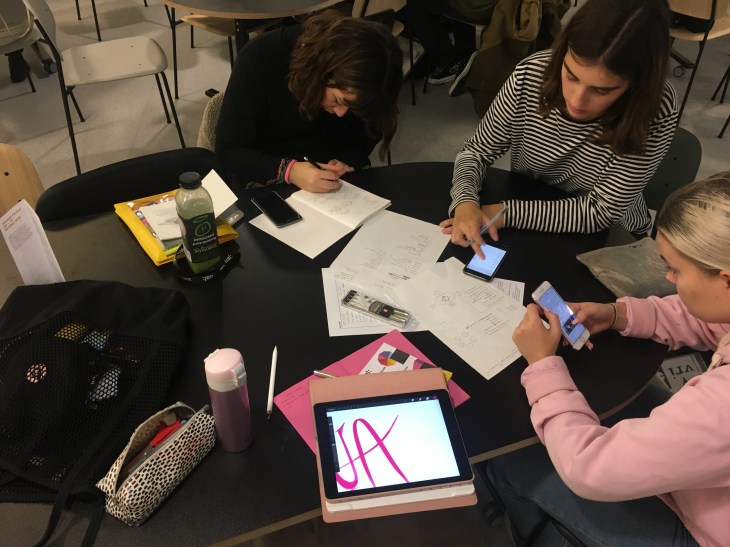
Introduction: Our idea vision is about focusing on the problem of the feeling of not belonging in an environment for example university, or any other public area. Our rough idea is creating a comfortable space for example a caffe where everyone feels like they belong. The feeling of not belonging sometimes creates this lack of communication between people, and makes the environment disconnect from the world, but connected in the technology itself. The disconnection creates many problems the young generation faces and we think it’s important to talk about them.
The space will be designed by our two members from BA Design for Branded Spaces; Kat and Sophie. They have explained to our group what their course is about and by using the sketch up software they will design the space. Together we will think about the colour and atmosphere of the space, as it follows all the different areas we have to focus on. Myself and Caterina will design illustrations for the space, create flyers and posters for marketing purposes. We will think about the logo design and how we will bring people together.
The space will be designed with different highest and shapes, in order to give it a bit more artistic and playful mode. Finding the correct balance will be something that we are trying to look for with everything we can think of.
Activities in our space; organise motivational speeches, healthy space means clear head, meditation and mindfulness, yoga classes, music bands,
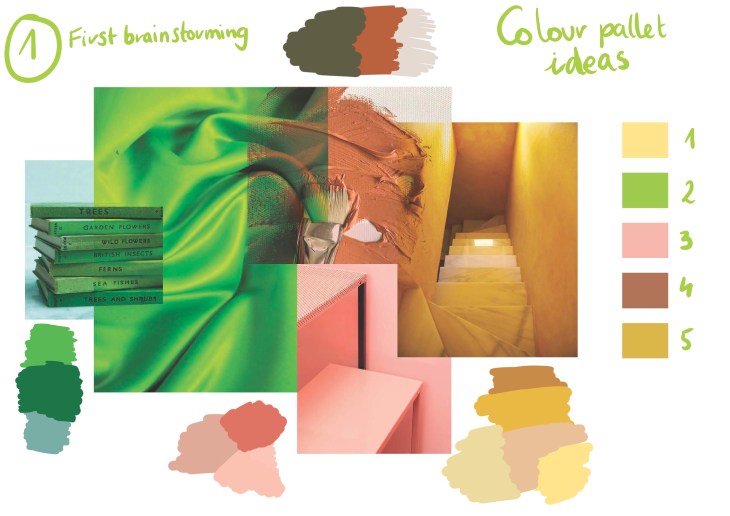
When designing a space the colour will be important. Colour Theory and association. Colour : yellow, green, orange, pink; cool tones.
Things to think about that we have come up with: Name of the space, designing the space, colour theory and association, texture and material, posters and flyers, marketing, logo designs, what materials to use, costumer profile and audience, what activities, sound: acoustics, idea vision, lighting- nature light, shades of colour, balance, combination between colour and texture, soft materials, thinking how it looks from the outside and inside so it attracts people, atmosphere (welcoming and positive)
Designing posters and flyers for marketing purposes
Creating a name for our space,
What matters to us as a group, is that anyone that feels like they don’t belong somewhere, and they are just trying to find a healthy space in the head, they can come to our space to disconnect from the world.
Costumer profile;
Audience ;
No connection to technology when entering;
Mood board; Colour mood board, costumer profile board
Week 2: 01.10.19 Audiences
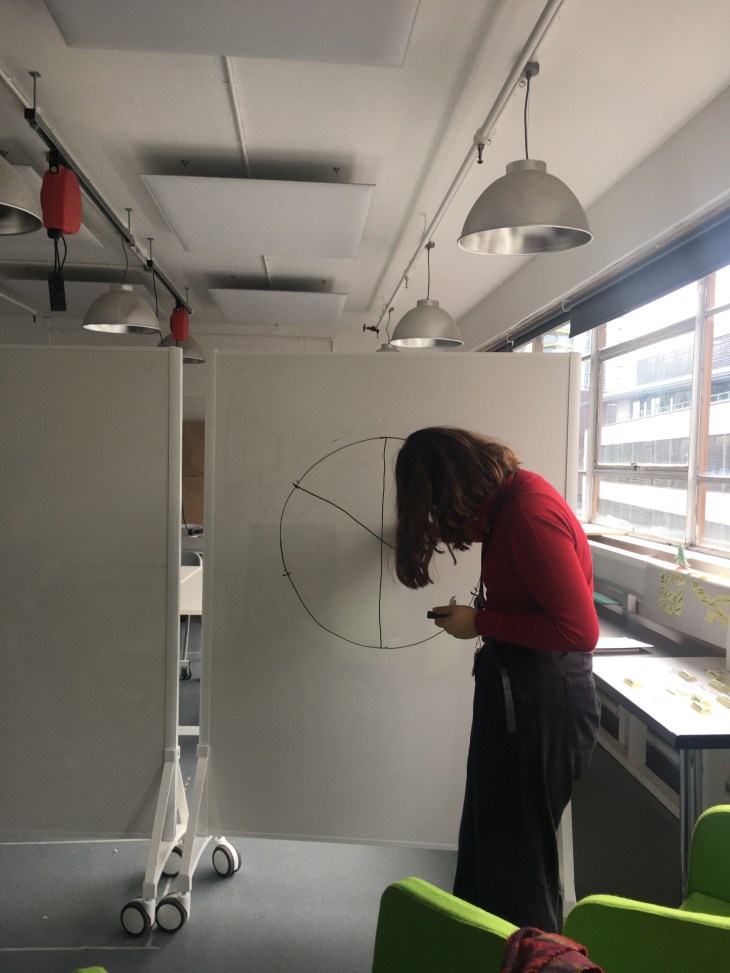
In this session, we have learned how to understand our audiences and end users. For this session, we were asked to create a presentation with our group about our idea of answering the brief. Together with my group, we created a small power point presentation that answers the question about our costumer profile, what matters to our group and how we want to showcase our idea. The things we created were.
Week 3: 08.10.19 Narrative and second meeting with my group.
This weeks session was about the art of storytelling throughout humanity. Few questions that we have touched on are
– how can visual language aid in narrative construction?
– how cam values, ideological perspectives and cultural hegemony/bias impact creative output for positive or negative effect?
– what roles does storytelling play in your practice?
-how can you utilise narrative construction to engage your audience?
– is there a story behind your practice? can you engage potential clients and collaborations?
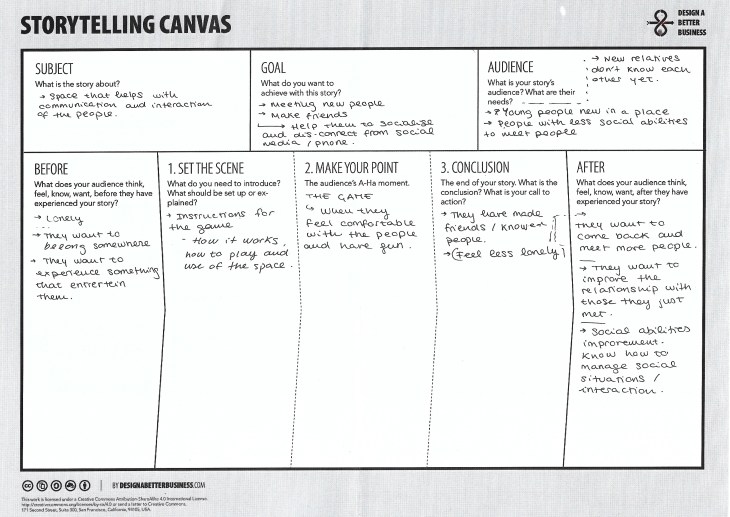
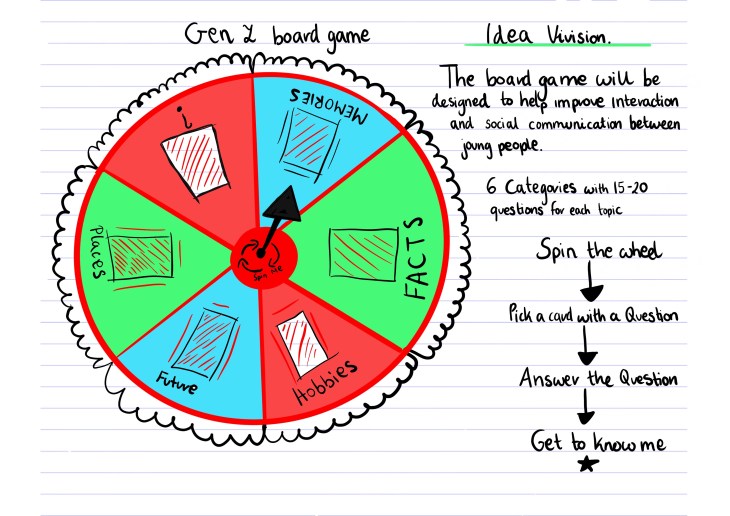
New Idea: We want to design a board game for our space. The space will be a reflection of our game, therefore as you come in you feel like you are in the game. The final product will be a board game that people can interact with, to improve their social communication and interaction with others.
Creating a board game that will make our caffe, a caffe will be named after our board game, people will rotate to interact with this game in a social way, we want to tackle the issue of lacking communication, social pressure and social boundaries, the idea that people can meet and interact in a healthy environment.
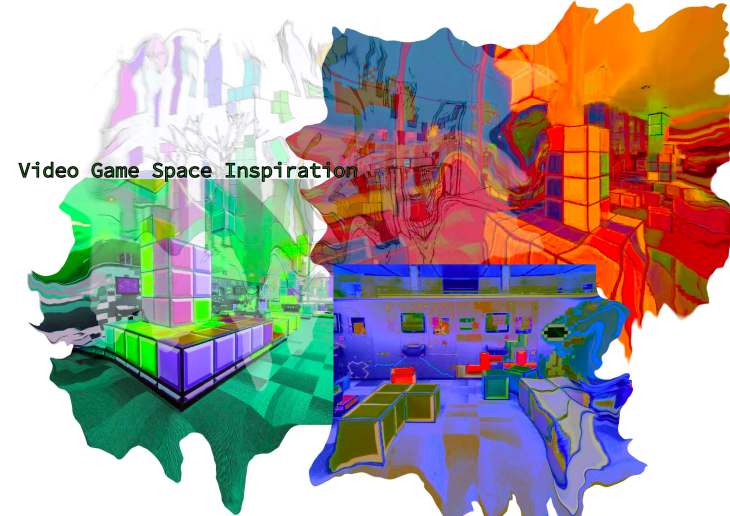
Movie Jumanji inspiration:
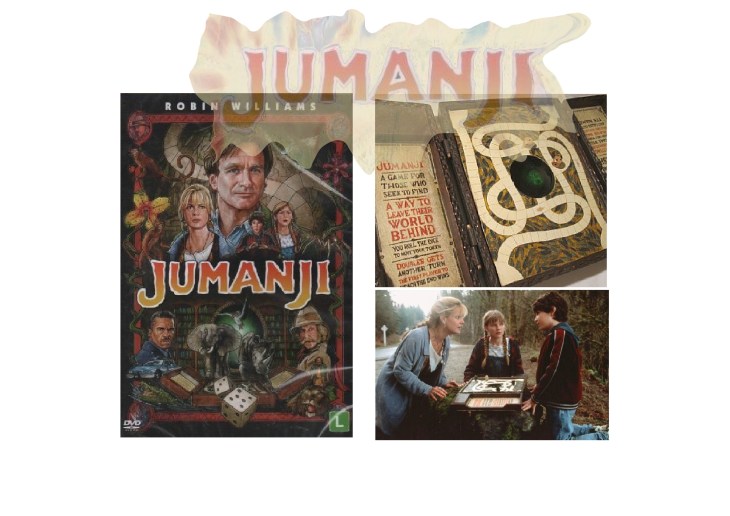
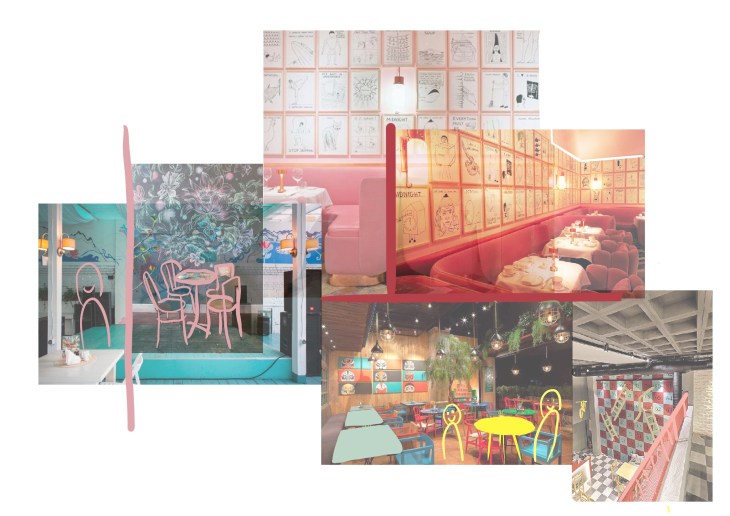
Board Game inspiration:


Statistic and Facts of people with social difficulties and research:
Lecture with Dan Perri
Week 4: 15.10.19 Community and Collaboration
Lecture with Clive Russell and Charlie Waterhouse
Morgan H.West founder of DC talk:
https://creativemornings.com/talks/morgan-h-west/1
First space idea and colour pallets boards.

Organisation and Presentation Plan


References used in presentation:
https://www.commonsensemedia.org/social-media-social-life-infographic
Feedback from todays presentation:
– marketing strategy (research more about gen z and the ways we can capture their attentions
– change activities terms (like yoga, mindfulness,…) to make it clearer that our activities are for gen z in specific
– have some research to backup our colour and material choices
– create some sketches of the space where we can see people engaging with it
– use social media in an ironic way (as this is where we find our audience)
– how do we get to people who feel lonely? How can we make them get out of their place and comfort zone?


Prototyping final board game
Part of our marketing strategy is creating illustrations that can be turned into posters and flyers, that will be hanged around school area or public place to encourage people to visit our PUA SPACE. Ironically, we also created an Instagram account outlining what the PUA Space is about. The Instagram was created to connect people in order to disconnect them from technology in our space;
You can also find the latest information about the upcoming events also through our calendar event; where activities like motivational speakers, yoga classes or mindfulness will take place with our everyday board game routine. (Presentation pitch)
Posters created by me for the advertising and marketing purposes
Instagram pages and social media context created by me for marketing strategy

 Despite my deepest thoughts